
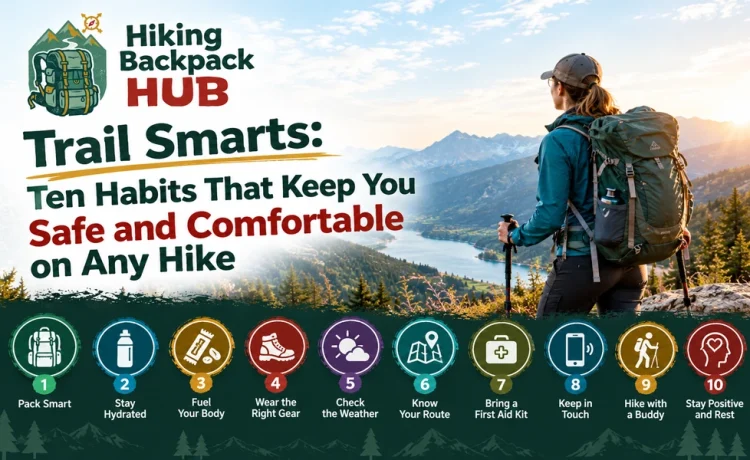
Experienced hikers are rarely the strongest or fastest people on the trail. What sets them apart is a set of small habits that prevent problems before they start. They drink before they are thirsty, adjust layers before they are cold and notice trouble while it is still minor. None of this requires special talent. These habits can be learned in a few trips, and together they make hiking safer and far more enjoyable. Here are ten worth building into every outing.
1. Eat and Drink on a Schedule
Waiting until you feel hungry or thirsty means you are already behind. Sip water regularly and snack every hour or so, especially on hard days. Low energy and mild dehydration quietly harm your judgment and mood, which is when small mistakes happen. Keep snacks somewhere you can reach without removing your pack, such as hip belt pockets, so you actually eat them.
Know your water plan before you leave. Carry enough for the longest dry stretch, and treat water from natural sources with a filter, purifier or chemical treatment. Even clear mountain streams can carry pathogens that cause serious stomach illness.
2. Manage Layers Before You Need Them
Sweat is the enemy of warmth. When you start to heat up on a climb, take a layer off before you are soaked, and put one on at rest stops before you chill. This is sometimes described as being slightly cool when you set off. The cycle of removing and adding layers feels fussy at first but prevents both overheating and the cold that follows a sweaty break.
A reliable system is a moisture-wicking base, an insulating mid-layer and a waterproof shell. Cotton holds moisture against skin and dries slowly, so leave it at home when conditions could turn cold or wet.
3. Treat Hot Spots Immediately
Blisters rarely appear without warning. A warm patch on your heel is the signal to stop and act. Tape or cover the area right away, adjust your socks and make sure your laces are doing their job. Ten seconds of attention at the first hint of friction can save you from a painful final few miles.
Prevention starts earlier. Wear well-fitted footwear that you have broken in, choose socks that wick moisture and carry a small repair kit with tape and blister dressings.
4. Check Your Navigation Often
Getting lost usually happens slowly. You miss a turn, keep walking and add distance before you notice. Build the habit of confirming your position at every junction, stream crossing and major change in terrain. Look behind you occasionally too, because the trail looks different coming back and you will want to recognise it.
Use more than one tool. A phone with offline maps is excellent, but batteries fail and screens crack. A paper map and a compass that you know how to use remain the dependable backup.
5. Pace Yourself for the Whole Day
Starting fast feels good and costs you later. A pace that lets you hold a conversation is usually sustainable, and breathing that is too hard to talk is a sign to slow down. On climbs, shortening your steps and keeping a steady rhythm uses less energy than surging and stopping.
Keep your group together at the speed of the slowest member. Splitting up means the person who needs the most support is the one who has the least, and it makes it harder to notice when something goes wrong.
6. Watch the Weather, Not Just the Forecast
Forecasts are a starting point. Conditions in the mountains can change quickly, so pay attention to what the sky is doing. Building clouds, a sudden drop in temperature or a shift in wind direction can mean weather is arriving earlier than predicted. In many ranges, afternoon thunderstorms are common, so plan to be off exposed ridges and summits by midday.
If lightning is nearby, move away from high points, open ground and isolated trees, and avoid shelter near water. Decide your response in advance rather than debating it while thunder is overhead.
7. Pack and Carry Your Gear Smartly
How you load your pack changes how it feels. Keep heavier items close to your back and roughly between your shoulder blades and hips, and place things you will need during the day where you can reach them. A well-adjusted pack transfers most of the weight to your hips, not your shoulders. If your shoulders ache after an hour, the fit or loading is probably off. The practical gear explainers at Hiking Backpack Hub cover adjusting straps and packing order in plain language.
Keep a rain cover or liner so your sleeping bag and spare clothes stay dry. Wet insulation is one of the fastest ways to turn an uncomfortable night into a dangerous one.
8. Respect Wildlife and Leave No Trace
Keep a respectful distance from wild animals, store food as local rules require and never feed anything you meet on the trail. In bear country, follow the guidance for the area, which may include bear canisters, hanging food or carrying deterrent spray you have learned to use.
The seven Leave No Trace principles are a good framework: plan ahead, travel and camp on durable surfaces, dispose of waste properly, leave what you find, minimise campfire impacts, respect wildlife and be considerate of other visitors. Pack out everything you pack in, including food scraps and tissue.
9. Know Your Limits and Your Exit
Confidence is useful, but so is humility. Before you set off, know where the nearest exit routes are and what time you need to turn around to finish in daylight. Carry a headlamp even on day hikes, because delays happen to everyone.
Learn basic first aid and carry a kit that matches your trip length. A course in wilderness first aid is a worthwhile investment if you hike often or go far from help. If someone in your group is exhausted, confused or unusually clumsy, treat it as serious and rest, warm up, hydrate and consider turning back.
10. Reflect After Every Trip
The quickest way to get smarter on the trail is to review what happened. After each hike, take a few minutes to note what worked, what you carried but never used and what you wish you had. Small adjustments add up quickly, and within a few trips your kit and routines will feel dialled in.
Make It a Habit
Trail smarts are less about knowing everything and more about doing a few simple things consistently. Eat, drink, adjust layers, check your map and be honest about conditions. If you would like practical, beginner-friendly explanations of these skills in one place, the trail smarts section is a good next step. Pick one or two habits to focus on this season, and the rest will follow naturally.
About the author: Dana Okoro writes about trail preparation and backpacking at Hiking Backpack Hub. Read more of their work on the author page.