
The Story of the Orient Express
The story of the Orient Express starts in Europe, 1883, at a time when the rail systems were a mess, crossing international borders was a slow and uncomfortable affair, and your comfort level varied wildly depending on where you were. When the original Orient Express was launched, travelling wasn’t the same any more. It redefined what travel could feel like.
It wasn’t just the speed or distance that made the Orient Express stand out. It was the idea that a train journey could be not just comfortable but also elegant, immersive and even aspirational. The Orient Express was the epitome of refinement. earning a reputation as one of the world’s most famous trains, a legendary train, and eventually an icon that helped define the Golden Age of Travel.
Venice & The Romance of Arrival
One of the most lasting memories of modern travel is arriving in Venice for the first time, stepping off the train and straight into that incredible, water-logged city with centuries of history and preserved architecture just waiting to be discovered. That perfect combination of breathtaking scenery, historical charm, and romantic atmosphere is really what the Orient Express was all about.
The modern form of this experience, expressed through the Venice Simplon-Orient-Express, highlights just how far luxury rail travel has come. It’s not about just getting from point A to point B. It’s about a multi-day journey through Europe’s countryside, stopping at amazing destinations, enjoying fine food and drink, and even taking a few overnight stays along the way.
Then there’s the feeling of stepping off that luxury train and straight into the heart of Venice as the sun comes up over the Alps. It’s a feeling that’s been replicated every time someone has boarded a luxury train since early 20th-century rail travel.
The Modern Venice Simplon-Orient-Express Experience
The Venice Simplon-Orient-Express is still running under the Belmond brand today, and they’ve done a fantastic job in keeping the charm of the original 1920s and 1930s carriages, while still adding all the modern comforts you’d expect.
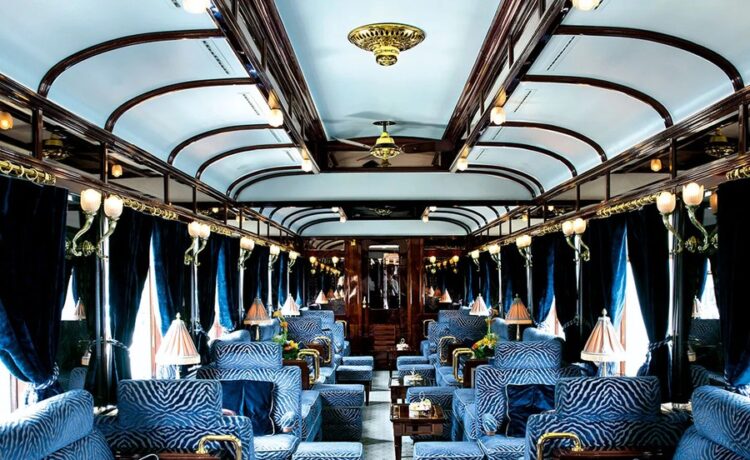
Each carriage has been lovingly restored in art deco style — beautiful wooden panelling, intricate metalwork, and just the right lighting to recreate the old-world luxury of rail travel. You can choose from a compact classic twin cabin with seating and sleeping arrangements or go for something a bit more spacious, like a suite with a private seating area and extra perks. Each one just offers a slightly different level of luxury.
At the high end, the Grand Suite provides a notably enhanced experience, with a proper double bed, an en-suite bathroom, personal butler service, and even private dining in the comfort of your own cabin.
What Orient Express Routes Transformed European Travel
The original Orient Express route was one of the most significant developments in European travel history. Not just because it connected major capitals without the need for any train changes, but because it was a practical revolution in international rail travel, smoother border crossings and a direct link across Western and Eastern Europe. The most famous run of the Orient Express was from Paris to Istanbul, or Constantinople to the purists, with stops at all the major transit hubs in between cities like Budapest and Vienna.
This route was legendary not just for its length but for what it represented: a chance to travel right across Europe in style, with no need to change trains. This has given it a real cultural significance too, as a link between East and West. Variations like the Paris to Venice, London to Venice and even Paris to Istanbul to Athens routes have expanded on this idea, hitting off major tourist and diplomatic cities.
Nowadays, the idea of the original Orient Express route still influences how modern luxury rail companies design their immersive European journeys.
The Feeling of La Dolce Vita on Rails
What made the whole experience so timeless was the atmosphere. That elusive “la dolce vita” feeling that just keeps enticing travellers to this day. People still describe it as like being in the slow lane, where life just seems to happen in slow motion. And the more you travel, the more you start to feel like slow travel is just part of the journey.
On the train, life moved at a pace that was nothing short of sedate. Set mealtimes in those fancy dining cars were always multi-course affairs, while breakfast and afternoon tea would arrive at your cabin or dining space right when you were expecting them. And then there was the fantastic team on board — the train manager and the rest of the staff who brought a sense of theatre to the entire experience.
This wasn’t just about getting from point A to point B. It felt like a lifestyle in its own right. The Orient Express turned time into something you could really enjoy, slowing the rhythm so the journey became a pleasure and the atmosphere wonderfully unhurried.
Why 1883 Changed Everything
When the journey first started out in 1883, it marked the beginning of a whole new era in the way people thought about travelling across Europe.
Before that, travelling long distances by rail was a pretty gruelling experience. Multiple changes of train and you’d often end up squashed in a seat that wasn’t exactly the most comfortable. But with the arrival of the first luxury train service, everything changed.
Passengers finally caught on to the idea that travelling could be far more than just a means to get from point A to B, and that with a touch of elegance, the entire experience could actually be enjoyable. This is when the “golden age of travel” really started to take off, as people began to see travelling between cities as something worth treating themselves to.
How Orient Express Routes Evolved across Europe
Over the years, the network grew and became more involved in the SNCF services, and then later, modern luxury versions of the old international routes started. They used all the latest rail infrastructure but managed to keep hold of the heart and soul of the originals.
Nowadays, you can even find modern versions like the Simplon Orient Express and the Venice Simplon Orient Express, which have restored some of the old carriages and still use the modern rail network to get you where you need to go.
Even the brand’s expansion into hospitality, from Orient Express hotels to properties like Alberg Orient Express, shows how much the brand has evolved beyond rail into wider luxury experiences.
Inside the Venice Simplon-Orient-Express journey
The modern Venice Simplon Orient Express is probably as close as you’ll get to the original version. It has vintage carriages, and it tries to recreate the original service in every way.
When you step on board, it’s like stepping back in time. Every little detail — from stashing your bag to looking at the decor, to the way the staff treats you — is done with a thought for the original experience.
You can choose between a compact Twin Cabin, a spacious suite or a Grand Suite, and whichever you choose, it’s all about getting the most out of the experience from start to finish. Even themed or related experiences like the Hiram Bingham train in South America show just how much of an impact this luxury train model has had around the world.
Luxury Trains and How Europe was Transformed
When luxury trains first came out in Europe, it completely changed the way people travelled. It turned long-distance journeys into an experience not just to get from one place to another, but to get there in style.
Before the Orient Express, rail travel was all about point A to point B, but after the first luxury train came around, that whole view changed. And of course, it had a knock-on effect for other train operators like Belmond Train Services, who started to offer similar luxury service. The result was that luxury rail became something you’d be willing to pay for.
Fictions like Agatha Christie’s “Murder on the Orient Express” helped elevate the train from a mode of transport to a storytelling legend.
Life Inside the Cabins
At the heart of the entire experience is the cabin. It’s where the intimacy of the journey comes alive, and where you get to experience the personal space that makes it all worthwhile.
A classic Twin Cabin is essentially just a seat by day and a bed by night, but with all the useful storage you need and fold-down beds. A suite takes it up a notch with more space to lounge around, a private bathroom, and a bit more separation between living and sleeping space. And then there are the Grand Suites that deliver a luxury hotel-like experience on rails.
Every single element, from the upholstery to the lighting, is purposely designed to create this illusion that you’re on a luxury train, not just some ordinary one.
The Legacy of a Legendary Journey
Even today, when you take a journey on the Venice Simplon Orient Express, you are still taking part in a tradition that started back in 1883, and one that changed the way Europeans got around.
From Budapest to Venice, and Paris to Istanbul, the original Orient Express route still shapes luxury rail journeys today and all the stories that go with them.
What started off as just a simple railway line connecting two countries ended up changing luxury travel and leaving behind a legacy summed up by elegance, nostalgia and the romance of the journey.